
Trade, not Aid!
Karen Blixen Camp distributes our revenue following the principle trade, not aid. We make it possible for the local Maasai community to profit economically from our presence in their area.
The tourism industry is often criticized for not ensuring that enough of its revenue goes back to the host community; making it difficult for the local people to profit financially from camp located in their vicinity. Karen Blixen Camp distributes our revenue in many different ways.
Bed night fee for staying at the camp
Karen Blixen Camp protects 3,400 acres (1,373 Ha) of natural wildlife area as a private concession area on lease agreement with our local Maasai landowners. Every time a guest spends a night at our camp we pay a bed night fee. In 2011 the bed night we paid 70,000 USD as bed night fee.
Use of local suppliers
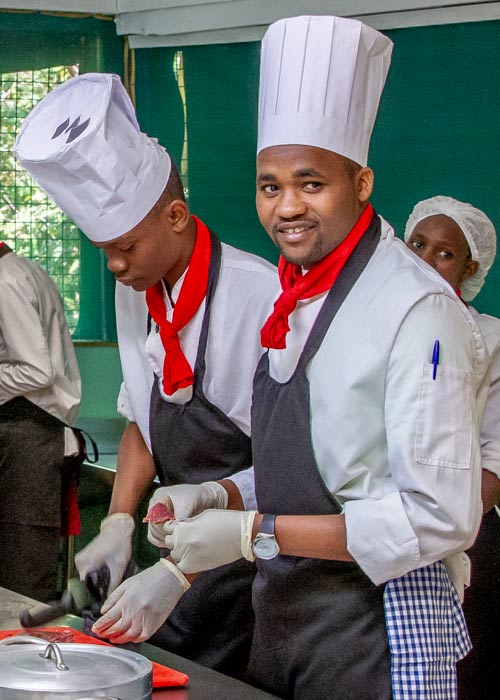
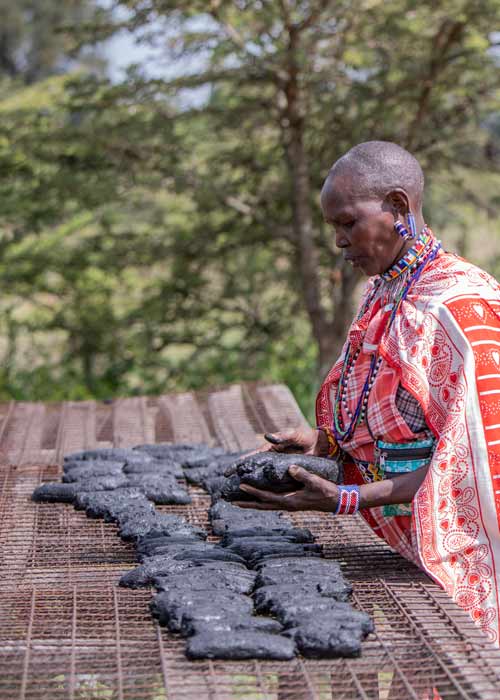
Free ranging and eco friendly Masai goats and lambs are sold by Masai herdsmen and served for our staff; either barbequed or used in stews. Milk for the staff’s morning chai (tea with hot milk) also comes from the local Masai cattle, grazing on the savannah. For logistic and contractual work we hire local trucks. In total, 40,000 USD are spent yearly using local suppliers, saving us money, time and diesel not purchasing from Nairobi.
Guest visits benefit the local Maasai community
Karen Blixen Camp has initiated a simple ticketing system to ensure direct payment and transparency. When guests visit the traditional Maasai village they are obliged to obtain a ticket at the camp. We keep track of all sold tickets. At the end of each month the total amount is calculated and the money paid. In this way, the villagers are ensured to receive the money they are entitled. Last year, we forwarded 8,500 USD on behalf of our guests. Other camps in the area have adopted this transparent ticketing system. We work with Tribal Voice Communications Ltd. Please visit Tribal Voice for more information.
Beautiful beadwork handmade by local Maasai women
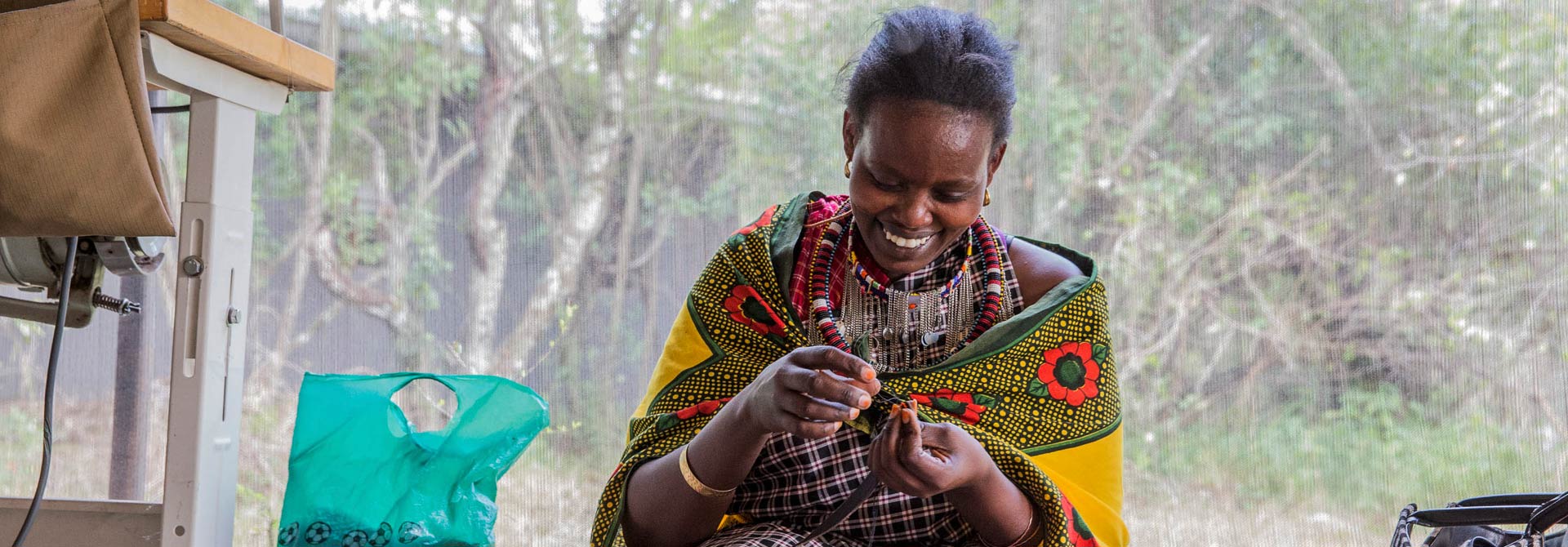
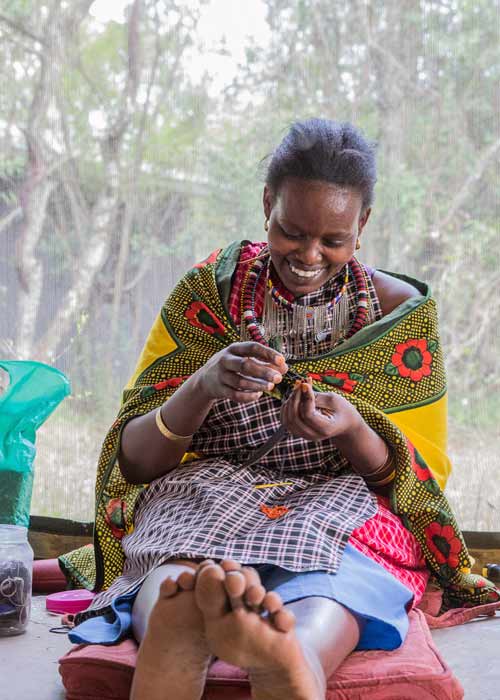
The beautiful Masai artifacts for sale in the gift shop are made by the local Maasai women’s group. It was the women who took the initiative and came to sell their beaded armbands, wedding necklaces and rungus (wooden clubs). Since we wish to promote trade, not aid, prices are negotiated and the gift shop makes a profit every time our guests buy the artifacts. Last year, we bought Masai beadwork worth 3,600 USD and sold everything, thus making the business profitable for both parties.

Start Planning Your Safari
Let us help you plan your trip, efficiently and at the best rates. Get in touch with your inquiries or book instantly if you are a return guest. We look forward to be of assistance.
Online Booking Partners
 |
 |
 |
 |
 |